CNC Router Bits
Choosing the right bit for the job can be daunting but that's OK, I am here to help! For a comprehensive overview, check out the Guide-a-logue
For now here is a quick overview:
Aluminium / brass / non ferrous
- (Profiling and cutting) 1 flute up cut DLC – some of the best bits for cutting aluminium in Australia
- (Milling) 2 flute uncoated and 3 flute uncoated
- (Milling) 3 flute up cut DLC – for a mirror side finish
Plastics
- (Soft and Hard Plastics) 1 flute for plastics – great value bit
- (Hard plastics) 1 flute up cut DLC – cut faster and cleaner
Timber Engraving / Pocketing
- 2 flute straight cut great value. OK top and bottom finish
- 2 flute down cut burr free top finish
Softwood (MDF and Ply) Profiling/ Slotting
- 2 flute compression (up/down cut) is our pick for plywood, with a flawless top and bottom finish
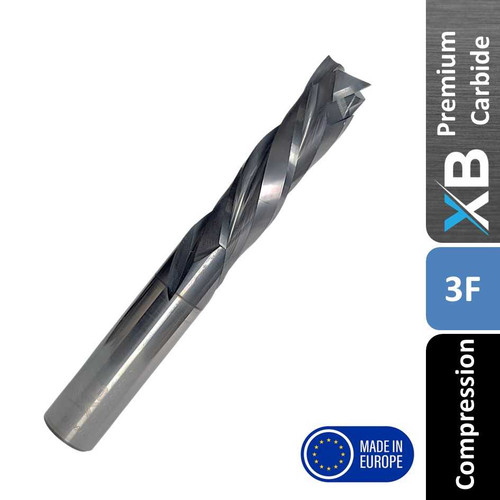
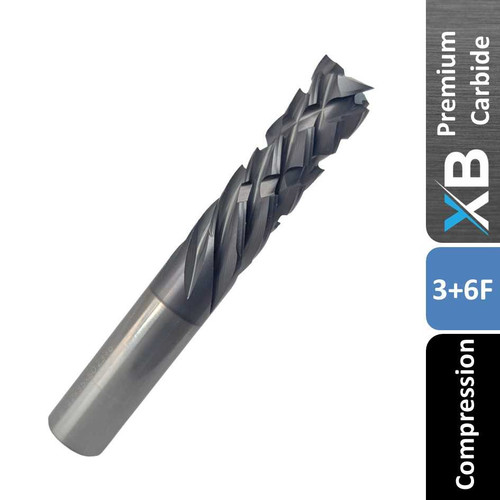
- 3 flute compression (up/down cut) is our pick for MDF, chipboard and melamine
- 2 flute straight cut great value. OK top and bottom finish
- 3 flute chip breaker straight flute same as above but 50% more efficient
- Industrial range - XB Panel Tools
- Carbitool range - Carbitool Tools
Hardwood Profiling/ Slotting
- 1 flute compression (up/down cut) is the best compression bit for hardwood, with a clean top and bottom finish
- 2 flute straight cut great value. OK top and bottom finish
- 2 flute up cut great value. Burr free bottom finish
- 1 flute for plastics high efficiency hardwood cutting. Suited for weaker CNCs
- Industrial range - XB Panel Tools
Aluminium Composite Material / Panel (ACM / ACP)
- 1 flute down cut burr free top finish. Leaves chips in slot
- 1 flute for plastics and 1 flute up cut DLC great top finish. Takes chips out
3D profiling
- 2 flute ball nose and 2 flute tapered end mills for 3D carving
- 1 flute V bit, 2 flute V bit and 2 flute router V bit for V carving
- Cove bit for larger 3D contours or juice grooves in chopping boards
Fibrous material / Carbon Fiber
- PCB Cob cutter great value bits for phenolic material
Composite laminate
- PCB Cob cutter great value bits for phenolic material
- 1 flute up cut DLC is a workhorse
- Industrial range - XB Panel Tools
Buying guide: Up Cut vs Down Cut vs Compression · Choosing the Right End Mill · What the Flute? A Guide to CNC Router Bits
Frequently asked questions
Which bit should I use for plywood and MDF?
For plywood use a 2 flute compression bit, and for MDF, chipboard and melamine use a 3 flute compression bit (not for plywood); both give a clean top and bottom finish. For hardwood use a 1 flute compression bit. The 2 flute straight is the budget option, and the 3 flute straight chip breaker cuts about 50% faster.
Which bit cuts acrylic without melting?
The 1 flute up cut for plastics. For hard plastics and faster, cleaner cuts, use the 1 flute up cut DLC.
Which bit is best for ACM / aluminium composite panel?
A 1 flute down cut for a burr-free top edge, or a 1 flute up cut (plastics or DLC) for a clean top that clears chips out.
Up cut, down cut or compression: what is the difference?
An up cut gives a clean bottom and clears chips well. A down cut gives a clean top and holds parts down. A compression bit does both, giving clean top and bottom faces. Use a 1 flute compression for hardwood, a 2 flute for plywood and a 3 flute for MDF, chipboard and melamine.
Which bit for 3D carving?
A 2 flute ball nose for roughing and finishing, and a 2 flute tapered ball nose for fine detail.